Question 1
What is ?
- A. 13
- B. 11
- C. 12
- D. -12
Show answer and explanation
Correct answer: C. 12
Explanation
Antiderivative evaluated at the limits: 12. Check the endpoints and the power rule carefully.
AP Calculus AB · MCQ B · Calculator-active units
Definite integrals, substitution, FTC and Riemann sums.
Try to answer before opening the solution.
What is ?
Correct answer: C. 12
Antiderivative evaluated at the limits: 12. Check the endpoints and the power rule carefully.
What is ?
Correct answer: C. 4
The antiderivative is 2e^x, so the value is 2(eln 3-e0)=2(3-1)=4.
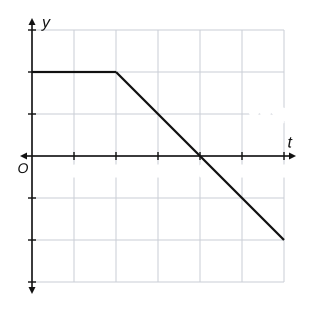
The graph of is shown. Let . On the interval , at what value of does attain its maximum value?
Correct answer: C.
Since g′(x) = f(x), g increases while f is positive and decreases once f is negative. The graph of f is nonnegative until x = 4 and negative afterwards, so g has its maximum at x = 4, where g(4) = 4 + 2 = 6. The endpoint value g(6) = 4 is smaller.